I knew I wanted my preliminary final project topic to focus on environmental ethics, but I wasn’t sure of the exact topic. Then I actually thought back to the first blog post where we shared fun facts about ourselves, and mine was hiking and traveling to National parks. I know I have a passion for that, and it’s something I am interested in, too. One topic that is relevant to me and something I’m learning in my other class is habitat disruption and land use. So, my goal is to try to connect the two, so I came up with this research question: “How has human land use around national parks changed the landscapes and habitats that parks are intended to protect?”
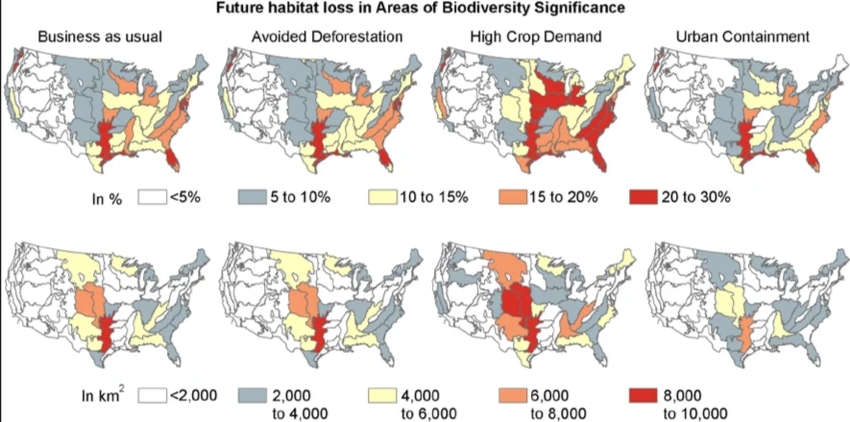
The Primary DH methods that I would like to use would be digital mapping or storytelling. I want to build my knowledge in those two methods because they interest me most and help me engage better with the topic. That also supports public-facing work, which can help my audience understand my thoughts and ideas better. The map below is an example of information I would use for this project.
For my DH final project, I want to do something with utilizing foreign sources. While not exactly a thorough idea so far, the basis is in using LLMs and AI models to collect, translate and process data from non-English sources, tying in to our lessons on data visualization and LLM usage, and I will be presenting it through Canva.
Class Notes
Review datasets from the data portal, to explore industry growth across the years. Especially interested in how to optimally use LLMs and AI, possibly something on prompting? Efficiency and strengths of open vs closed, maybe explore different models abilities on translation and source finding abilities? List data from the portal in a visually appealing manner on Canva, using LLMs to find initial datasets and for translation works.
Basic Proposal
Basic proposal: Using different LLMs to search for and translate foreign sources, potentially use them to help interpret said data, and use Canva to present these findings. Explores different AI models and what resources and data they draw from, translational abilities, my own ability to interpret and present said data.
Goals
I attempted to use AI, specifically Google Gemini, to see if it was able to have any meaningful impact on my proposal, which wasn’t particularly helpful. The main points I want to focus on are AI translational abilities and how to find new sources utilizing different models, as they both pertain to my current IS project and how to properly visualize this data for other to more clearly see.
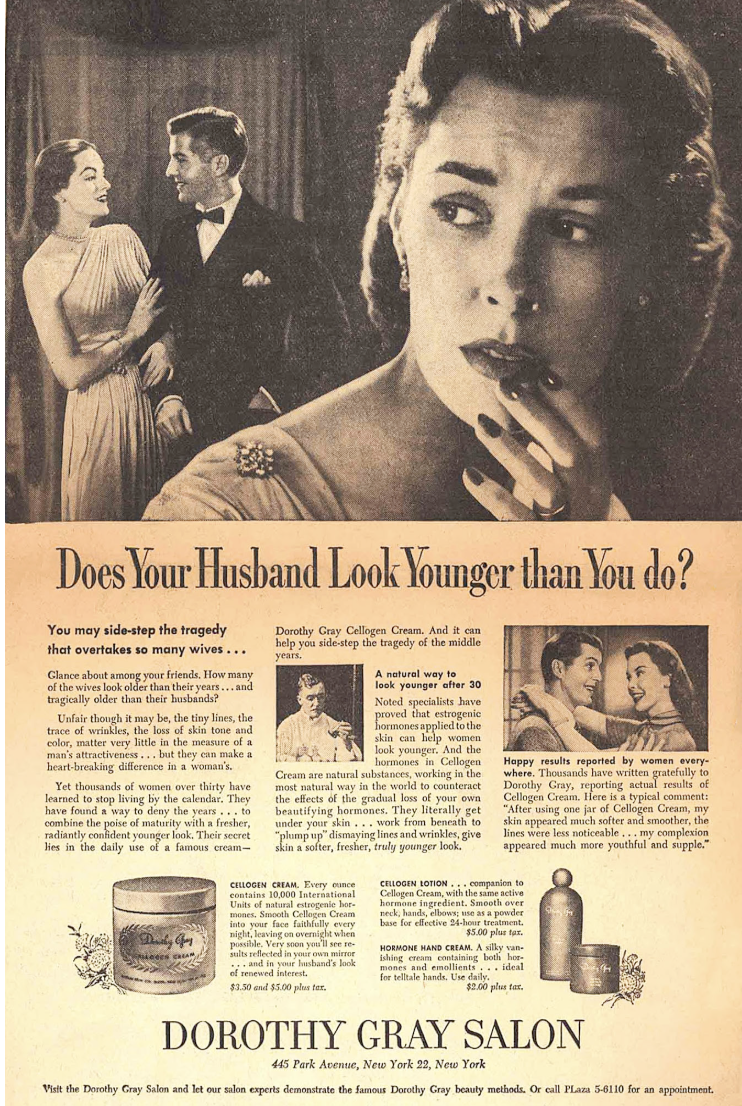
Whitfords. (2023, November 25). Surface tensions: The underlying truths of skincare advertising. Whitfords. https://www.whitfords.co.uk/surface-tensions-the-underlying-truths-of-skincare-advertising/
My final project is about analyzing skincare advertisements over time from 1980s to 2000s. I am yet to specify the time frame.
I have a couple of research questions: Is there a shift in who is presenting the product over time?
What are the gender trends?
Who is the product marketed for? Are there any changing health claims? Scientific language trends?
Is there a change in the “marketing” words and taglines over time?
I want to think more about whether the tensions involved are historical, cultural or human (gender). Currently, I am aiming towards gender as an issue or something worth exploring from different angles. I may come up with something cultural.
My primary Digital Humanities track is Canva. I thought it would be best to create a digital exhibit of the advertisements over time and possible one that can be scrolled through and zoomed in on (for some detailed context). I am taking ads from Duke’s digital Ad collection or Penn State University archives for now. I will look at when they were shared, who they are for, who or what is on the ad and put the findings in a digital exhibit.
Some of my preliminary sources are found in the Moodle under our course: Nathan Yau: Understanding data
Duke Digital Repository and the Penn State University archives
ch 1 “The Basics” from The Wall Street Journal Guide to Information Graphics
Mikel Djukic “Perception Deception” Data + Design
The Data Visualization Catalog “What Do You Want to Show?
Canva tutorials
Citations
Library guides: Advertising: History and archives: Archives: Digital collections. (2014). Psu.Edu. https://guides.libraries.psu.edu/adhistory/archives
For my final project, I am absolutely clueless about what I want to create a digital humanities project on. I know I want to create data visualizations and am open to story maps; however, I don’t know what data to use. To start generating ideas, I went to www.kaggle.com to search for a dataset to help me form some rough ideas. So far, the datasets that I am interested in transforming into a project are:
Burg, M. (n.d.). Abstract pink purple 3D Render. unsplash.com. https://unsplash.com/photos/abstract-pink-purple-3d-render-kE8-rUKjtQU
I actually have come up with a very crude digital humanities question; however, I am not very confident in its feasibility or whether it would be complex enough for the class. The project would be exploring the history of The College of Wooster student organizations’ political activism as reported in the Wooster Voice from the years 2000 – 2020. For this possible project, I would literally search all the Wooster Voices published between the start of the 2000 academic year and the end of the 2020 academic year. This question arose after this past weekend being homecoming, and there were a lot of alumni who spoke about their respective student organizations being very politically active off-campus. I’d mainly be looking at how invested was the student body about these policy changes as off-campus protesting is heavily restricted at the college today.
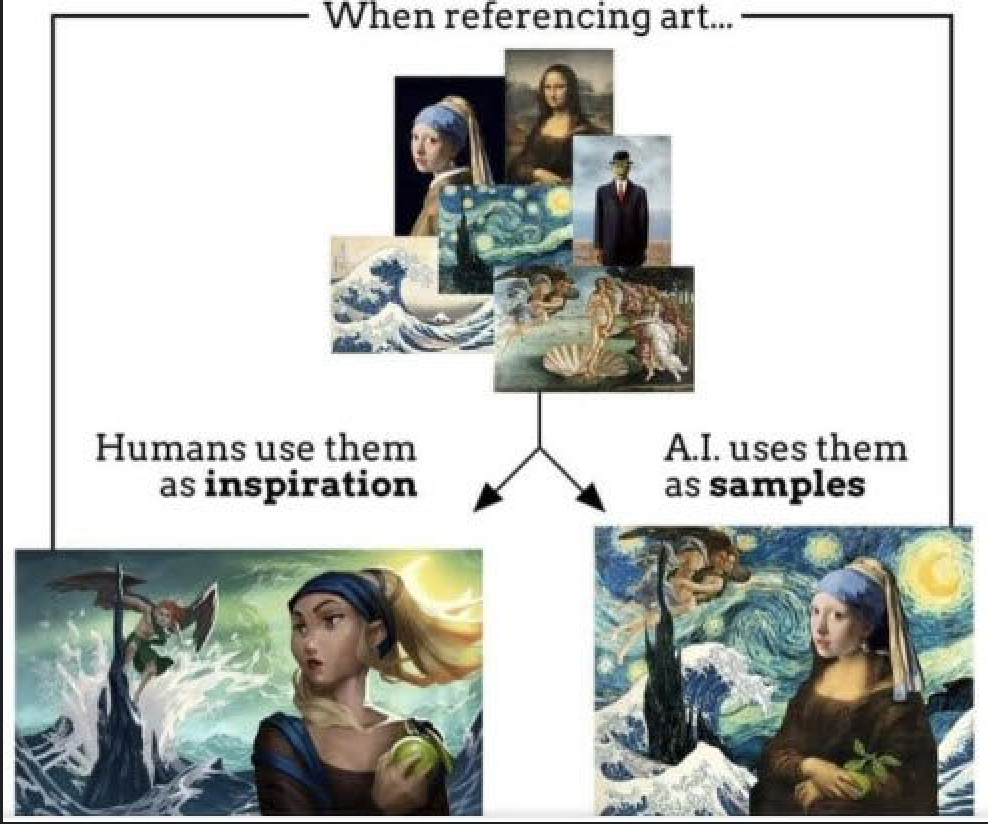
I want to explore more about AI prompting and its uses. I also want to see how it affects human creativity. My idea is to compare artists’ minds to AI art. Some of my research questions I am thinking about are:
Does AI accurately project artistic expression/ideas even with refined prompting?
Does AI affect the artistic process?
How do artists use AI in their process?
Do they have it do all the work?
How would it compare to creating ideas for an art piece?
Does it affect the ability to come up with new ideas for a piece?
Can the AI create your idea as you imagined?
Is it easier to have it generate an idea, or to control exactly how you want it?
Could it be used as a reference, then you create the piece yourself?
Now this is a long list of questions, so I want to refine it; however, this is just a proposal, so I am still brainstorming. As an artist, I like to compile my reference photos myself by doing historical research, positioning things in my artwork, finding portraits or people who look like my imagination, and more. I am able to control the colors I want and the angles of a piece. I can pick the sizing between focal points in my work. With AI, it creates its own image rather than knowing exactly what you want. I want to see if it can change to be similar to my idea through specific prompting or by giving it images I want to use.
I would like to focus on the skill of prompting AI, as it is being used more and more. I would like to use several to compare, such as ChatGPT and Gemini. I have not yet decided on my prompts or outputs; I am brainstorming. As the new head of social media and creator of The POT for the student engagement office at The College of Wooster, I need to know a lot about graphic design. I have to know how to creatively use my own ideas. I compete against a lot of marketing that involves AI, while personally I like to avoid it. However, with the knowledge of how prompting works, I can then apply it to my own thinking and not an LLM. I can ask myself those questions instead to then narrow my own ideas. But I also can see what the competition is using to create their ideas as well. As well as this, many jobs in the field I want to go into, social media marketing, it is helpful to know how to use AI creatively and effectively. A major skill to help with this is to know about prompting and how to control the AI.
Therefore, I want to practice by being specific in my prompting for art, as I do a lot of graphic design media. If I can accurately have it create exactly or as close as possible what I want through prompting, it can be a helpful tool to have in the new world of AI. This then leads to me learning how it may impact my creativity along the way as well and exploring the ethics or worth of using the AI. I can see if I find myself starting to rely on the AI and be affected as the MIT study showed, and I can see how its effectiveness could overrule the need for humans in the job market. To do all of this, I would also like to refer to the reading about how to prompt AI and test different ones and see if they interpret my ideas differently.
For my idea development, I did not use any LLM and decided to focus on creating with my own brainstorming. The underlying humanities stakes of my project are: How can using AI affect the creative process? Can it change your ideas in the art world? Can you really accept the art as your own? Is it even useful? Who my ideal public audience might be and how they would interact with my project is: My ideal public would be artists or those interested in the effects of AI art. They would interact with it by seeing the pros and cons, the effects, and challenging their ideas about the topic. They may agree or disagree with my takes and results; however, to do that, they still need to analyze and process my work. The skills I already have or would like to develop might translate into digital methods through: using my own art abilities and ideas to create on my own and then translate those into how I would prompt someone else. I then would format that prompting and insert it into the AI.
Two non-obvious cultural or historical angles on this topic that an undergraduate might easily overlook are the idea of creation and the idea of art overall. Many artists see art as human expression, so by taking that away, the art doesn’t accurately affect emotion. It also takes away an old art form that has been around for thousands of years that tells stories through human time. By taking this away, it could impact our future and the way people look back on the past in our era. By AI not being able to fully use human cognition and thinking, it can misunderstand and thus misrepresent our time. Then, in the future, people could look back on now and not fully understand what happened. One major blind spot or trap that I might fall into when trying to represent this kind of humanities problem with digital tools is that I cannot accurately express my ideas.
To work around this, I want to randomize what I will create by asking a friend for an idea. I will then create something fully on my own so that I have my own personal representation. Then I will enter the same prompt into several LLMs and see how it interprets it. I then will prompt it to lead into my idea and see if it can create something as similar as possible to my idea. I then will have a separate prompt where I create a reference photo on my own, then have it create one, and then create a piece from both to see how it affected my creative process. I also have found sources where other artists have tried this method, and I would compare my findings to theirs.
For this project, I will not be working in a team. I have decided to work on my own due to this surrounding my own creative process.
Further thinking: Does AI accurately project artistic expression/ideas even with refined prompting? Does AI affect the artistic process? I will keep refining these ideas and find what exact questions I want to ask. Media I want to include are pictures compiled of my art and my reference I made vs. AI art and the AI reference it made. I also want to connect it to the idea of what is art, what is creativity, and more.
After considering the MIT report on generative AI in higher education and thinking about how I use Ai in my own work, I think that college students should use AI, but only as a tool to help them learn. The MIT report found that “Brain connectivity systematically scaled down with the amount of external support” (Kosmyna et al., 2025). It also found that It also found that “the LLM group’s participants performed worse than their counterparts in the Brain-only group at all levels” (Kosmyna et al., 2025). These made me think about how using AI too much could affect how much students actually learn.
For my process, I thought about how I use AI for school. I think it’s useful for explaining things I don’t understand, organizing information, studying, and checking work to see if answers are correct. I also decided that I wouldn’t use AI to write an entire assignment that is supposed to show what I understand. I wanted to see how AI could help me learn without doing the work for me.
Artifacts
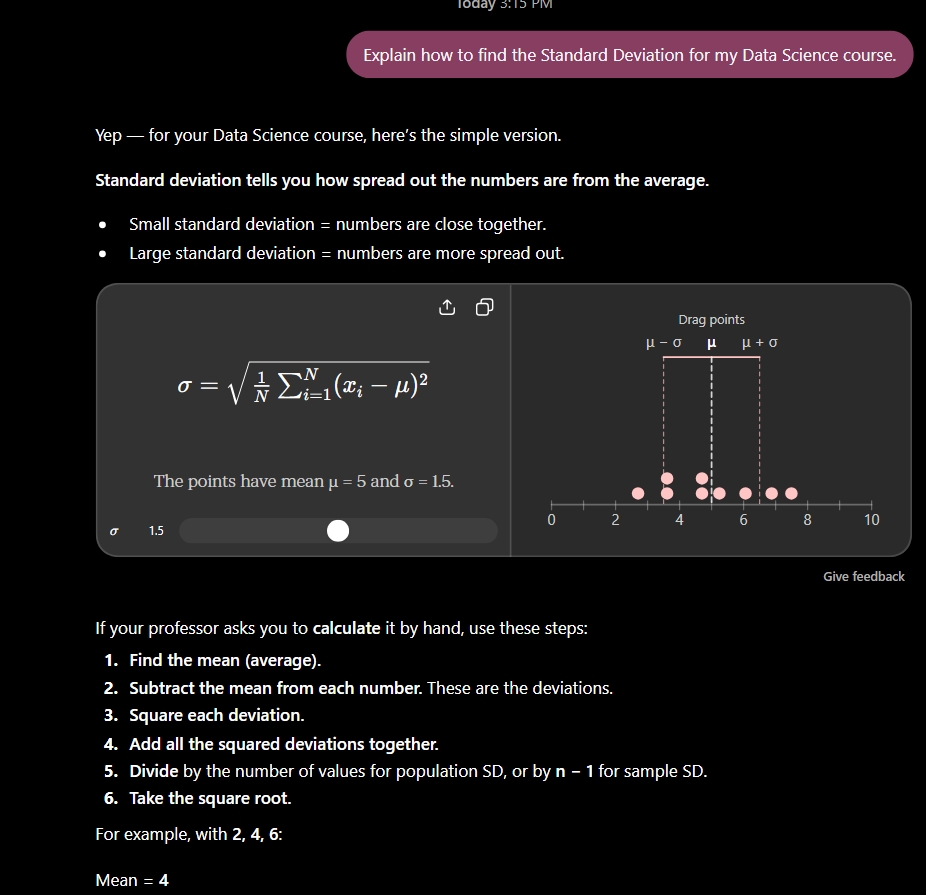
I asked Chat GPT to explain how to find the standard deviation for a Data Science course and give me an example. I used the response to help me understand the concept instead of just using AI to complete my assignment. It shows how I can use Ai to help while still doing my own work.
This project showed me that AI can still be useful depending on how I use it. It can help me understand things faster, but it can also make it easy to stop thinking for myself. I also leasrend that studets do not al have the same access to AI or the same understanding of how to use it. Going forward Ill continue doing the work myself and use AI when I actually need help instead of letting it do the work for me.
Kosmyna, N., Hauptmann, E., Yuan, Y. T., Situ, J., Liao, X.-H., Beresnitzky, A. V., Braunstein, I., & Maes, P. (2025). Your Brain on ChatGPT: Accumulation of Cognitive Debt when Using an AI Assistant for Essay Writing Task. MIT Media Lab.