Is ChatGPT the Next Big Artist?

AI USED: Grammarly for spell check.
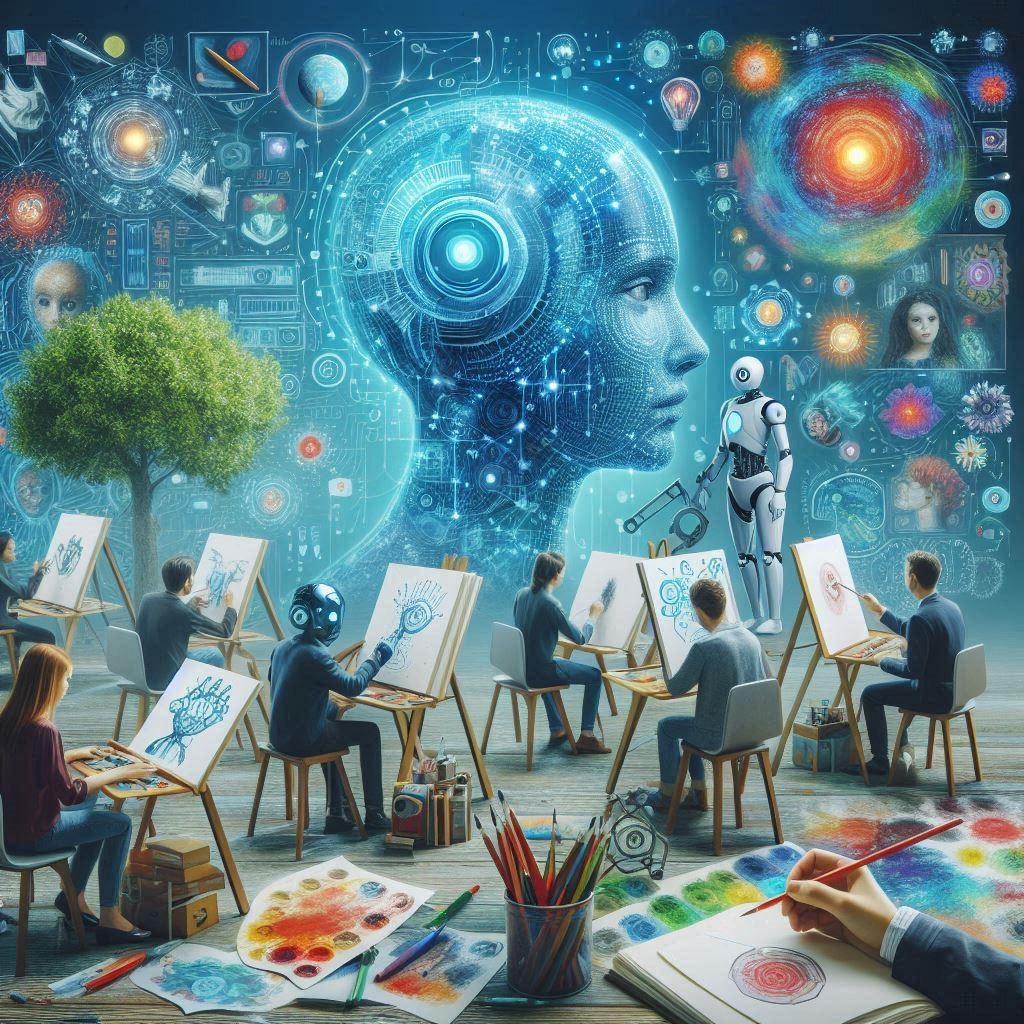
Shaner, Kyle. “UC Student Explores AI Art Ethics”. UC News, July 31, 2024, https://www.uc.edu/news/articles/2024/07/uc-student-explores-ai-art-ethics.html 

Some ethical and inclusive concerns I have are for those who cannot connect with visual art, such as those with visual disabilities. I am also concerned about language barriers, misunderstanding from non-artists, and those who struggle with brainstorming.

How I plan to address these concerns is by relating how this method could be used for non-visual art such as music, or creating captioning for my images I provide that can then be played out loud. I also want to make it so that there could be a translator applied by using simple language that can be directly translated. For non-artists, I want to explain my process in depth and all that goes into art to show how AI really can affect it. That in turn can also explain my art process and ideas compared to how other artists may do things.

To also connect this to data collection and privacy with ethics, I want to be transparent in my AI usage by stating my prompts, my results, what models I use, why I am using them, and anything else I come across that could be related. It is a concern of mine whether or not the AI will be taking my art and ideas that are entered and using them to train and take them for its own benefit. But this is a concern I can raise to other artists who may not be aware. In the Cornell study I am using as a source, they also mention this is saying, “Accusations of art theft arose surrounding the use of creatives’ works to train these models, as image outputs emulated prominent artists’ styles without their consent” (Campitiello). This highlights my point of concern about my personal art being integrated into the model. All art styles are different, but if the model uses them all to train, then that unique aspect can disappear.

It will also be interesting to see if the different AIs I will use will create different pieces based on bias. Another point is figuring out if AI prompting for art takes more electricity and damages the environment more than an average prompt. To continue this thought, is using AI for planning or referencing plagiarism? Technically, you are not using your own ideas for a starting point, similar to how you may reference a reading in text. These are all things I need to think about further during this process. 

To go with this concern, all that Google’s prompt guide shows for art is the description of its ability. This description is, “Design prompts that specify art styles, techniques, and subject matter to guide the AI in creating images that mimic specific artistic movements or evoke certain emotions.” (Google). The environmental concern for me is that, yes, you can submit a specific prompt as it says, but you will most likely need to refine the prompts and continue prompting. Therefore, it is not a single entry of an image prompt, but something you have to continue to submit multiple times for small fixes that it may not understand or ever fix. It specifically says, “to guide the AI” (Google), showing that you have to continue to give direction to it. We went over this prompt guide in class; however, we didn’t focus on this part of the reading, the part related to images. So in my study, I want to further explore this topic.

To represent the art community, I am referencing sources from other artists doing a similar study to show their ideas on the topic and their differing uses/styles. As I am just one artist out of millions, my ideas are not universal. And for others to test this, I can give prompts and something to try on their own to facilitate community participation.

In reflection of my planning, more concerns have come to me, such as these environmental impacts, how inclusive my work needs to be, and if the AI will take my art style. I will continue to reflect and try to find answers for these as I work.

Campitiello, Jess. “AI vs. Artist: The Future of Creativity.” Cornell Tech, February 20, 2023, https://tech.cornell.edu/news/ai-vs-artist-the-future-of-creativity/ 

“Prompt Engineering: Overview and Guide.” Google Cloud, May 4, 2026, https://cloud.google.com/discover/what-is-prompt-engineering  
When the Camera Becomes Part of the Problem

This project idea started from my photography class. I have always liked photography projects that focus on people and their experiences because I think photos can capture parts of someone’s identity and presence that are difficult to explain through words alone. As I started thinking more about representation, though, I became interested in a more complicated question: what happens when the camera can also contribute to the same problem it is trying to address?

For this project, I want to photograph people of color living or studying in a small, rural, predominantly white area, most likely beginning with campus and the surrounding community. One project that influenced this idea was the Mosaic Atlas. I was interested in the way that project connects identity, community, and location. It made me think about how I could explore similar ideas through portrait photography and possibly connect individual portraits to the places where people live, work, or spend time.

So What?

Part of my interest in this project is simple: I enjoy photography and want to continue developing my skills with it. At the same time, I think representation matters differently in places where people of color may already be underrepresented. Who gets photographed, how they are photographed, and what context is given to those images can influence how people understand a community.

I am especially interested in the difference between representing someone and making them seem like an outsider or an exception. In a predominantly white rural environment, photographing people of color could unintentionally emphasize their difference rather than simply recognizing their presence in the community. I do not think a photography portfolio can completely solve this problem, but I want the project to pay attention to the choices being made behind the camera instead of treating those choices as neutral.

Another part of this project that interests me is how portrait photography can contrast with surveillance technologies like Flock cameras. Both involve cameras documenting people in public or semi-public spaces, but they do so for very different reasons. Flock cameras are designed around monitoring, identification, and security, while I want this project to focus more on consent, context, and how people choose to be represented. That contrast could help me think more critically about the power of a camera. A camera can be used to watch people without their involvement, but it can also be used collaboratively to let people have more control over how they are seen. This makes the project not only about representation, but also about who has control over an image and what purpose that image serves.

Preliminary Research Question

My research question is still developing, but right now I am thinking about:

How can portrait photography of people of color in a small, rural, predominantly white campus resist exoticizing framing, and what choices involving composition, setting, and captions make that resistance visible to viewers?

Methods and Skills

For my method, I want to use digital storytelling through portrait photography. I am also considering incorporating mapping into the project. Using GIS could allow me to connect portraits to specific locations on campus or in the surrounding area, similar to how the Mosaic Atlas connects communities and stories to physical places.

I am still deciding what specific platform I would use for the final project, but I would like to create some form of web-based portfolio. I am also interested in learning more about GIS because it would give me another way to think about the relationship between identity, representation, and place.

Convergence

I have not connected with anyone in class who is working on the same type of project yet. However, I would be interested in talking with anyone who is also working with photography, GIS, mapping, identity, or place-based storytelling. I think there could be useful overlap between these types of projects, especially when thinking about how digital tools shape the way people and communities are represented.

Citations

I used ChatGPT (OpenAI) during the brainstorming process for this project. I used it to help organize my initial ideas, think through possible research questions, and revise the wording of this proposal. The topic, project direction, and final decisions are my own.

Mosaic America. “Mosaic Atlas Story Map Template.” ArcGIS StoryMaps, Esri, storymaps.arcgis.com/templates/7ef3792b2e5d4668b6d58c6a711cabee. Accessed 25 Sept. 2026.

Post 4: Project proposal (week 6)

1) Tentative topic:
LLM use in college academics, specifically how college students use AI tools such as ChatGPT for their academic work.

2) Research question:
How does the use of LLMs for academic work compare between students who use LLMs and students who do not, particularly when looking at academic performance and how students use these tools?

3) Primary Digital Humanities track:
Data science/data analysis. I am interested in using data to compare students who use LLMs with students who do not and creating visualizations to present the results.

4) Preliminary sources:
I plan to use course readings and discussions about LLMs and AI in academic work, along with data about student LLM use and academic performance. I will also look for additional sources about how college students use LLMs and how AI is being used in education.

5) Group members and responsibilities:
I currently plan to work individually. I would be responsible for finding or collecting the data, organizing and analyzing it, creating visualizations, and presenting results.

6) Questions I have:
I am wondering what an appropriate amount of data for this project would be and if I should get my own data from students or use an existing dataset. I also want to know how broad the comparison between students who use LLMs and students who do not should be.

Adam Beach Project Proposal (open to partnership!)

A picture of a Wooster Voice edition
The Wooster Voice. (2026). The voice: 1971-1980 | “The voice” student newspaper collection | the college of Wooster. Wooster.Edu. https://openworks.wooster.edu/voice1971-1980/

My preliminary final project topic is an analysis of the changing ratios of campus / noncampus news present in the Wooster Voice publication throughout the history of its publication.

I plan to analyze a portion of publications and manually determine the number of campus/noncampus stories and store these records in a spreadsheet which will later be submitted to Flourish to create a graph which will display the ratios between the categories and show how they change over time. If possible, I would like to overlay information regarding historic events, such as the Vietnam war and 9/11, and see how these events influence the ratios of publication.

Project proposal

Final project proposal

L
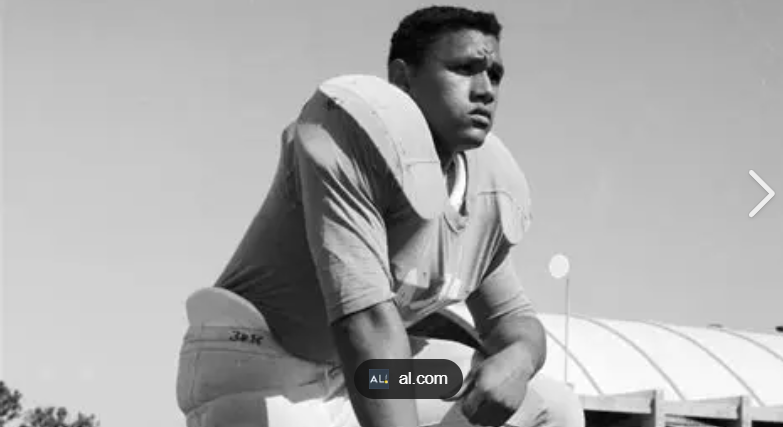
This Wilbur Jackson of University of Alabama a very well known black athlete

My final project is on the representation of Black athletes but more specifically, the digital humanities question is “How accurately do LLMs represent the Black athletes who integrated University of Alabama sports, and are lesser-known figures more likely to be erased or distorted than the famous narratives around them?” The digital method that I am going use is data analysis. However, to elaborate more, I am going to look up well-known Black Alabama athletes and lesser-known ones from 1954- 1968, then ask three LLMs to give me information on their careers and the events they attended. Then fact checking the information that it gives me by going through Alabama digital archives. I am evaluated which LLMs give me fake information, or what we refer to in class as hallucinations.

I chose to focus on the period from 1954 to 1968 because it spans the heart of the civil rights movement, from the Brown v. Board of Education decision to the assassination of Martin Luther King Jr. and the passage of the Fair Housing Act. I wanted to explore whether representation shifted during these years as a result of the struggle for civil rights. Did growing public pressure, protest, and legal victories lead to more frequent or more respectful portrayals of Black Americans? Or did backlash and resistance to change cause that representation to diminish?

For four years, I stepped onto the wrestling mat and looked around at a sport where I rarely saw anyone who looked like me. Wrestling has long been dominated by white athletes, and match after match, tournament after tournament, the absence of Black wrestlers was impossible to ignore. It hurt to feel like an exception in a sport I loved. That feeling is what drew me to this topic. It also made me wonder whether this imbalance was new or had deep roots in a history most people never talk about.

Cite information: “Wilbur Jackson.” Photograph. Courtesy of the Paul W. Bryant Museum, University of Alabama. Encyclopedia of Alabama. Alabama Humanities Alliance. Accessed September 24, 2026. https://encyclopediaofalabama.org/media/wilbur-jackson/.

What to do? What to do? – Final Project Proposals

The Brainstorming session on Wednesday 23rd, 2026 has left me with two possible topics for the Final Project. All which equally pull my interest. However some might be easier than others. The first topic is inspired by our discussion on the use of LLMs in academics. This time it would be looking at the use of LLMs in the scientific or political fields. This idea stemmed from the recent reports that U.S. military nearly launched an attack on a Chinese Vessel when an AI chatbot an analyst had used inaccurately identified the material the ship was carrying as nuclear weapons. Despite this being the first topic I came up with, this is the less developed of the two in terms of how I would execute it as a Digital Humanities project. However I did think of a few questions I could ask: What are the potential risk of LLM mistakes when used militarily? Do AI-generated campaign messages become more standardized than human-written ones?

The second idea is the one that ended up exploring during class, that being International Film Distribution. The will be a combination of data analysis with a sprinkle of digital storytelling. The questions I had were as follows: What does the network of international film distribution look like, and how has that network changed over time? Does international film distribution create a genuinely global network, or does it concentrate around a relatively small number of cultural and economic hubs? How did films move between countries, and what geographic patterns or inequalities emerge from those distribution networks?

The next part was figuring what skills I wanted to improve and how that would influence they way I would end up executing this project. Not entirely satisfied with the visualization of the Dog Breeds data, that would be a skill I would like to improve. It terms of tools I had no clue. I did participate in the LLM prompting in class, and I’m not gonna lie it didn’t help as much as maybe I had hoped. However most likely I will either build or find a data set that fits within my questions and then maybe then visualize the data as a network while also taking into account how disproportionate some of the data might depending on how much data we have on film distribution in certain areas. (It’s a little late uploading, Voices really didn’t want me to upload an image for some reason)

AI use: No artificial intelligence was used in the writing or editing of this blog post.