
When the Camera Becomes Part of the Problem

This project idea started from my photography class. I have always liked photography projects that focus on people and their experiences because I think photos can capture parts of someone’s identity and presence that are difficult to explain through words alone. As I started thinking more about representation, though, I became interested in a more complicated question: what happens when the camera can also contribute to the same problem it is trying to address?

For this project, I want to photograph people of color living or studying in a small, rural, predominantly white area, most likely beginning with campus and the surrounding community. One project that influenced this idea was the Mosaic Atlas. I was interested in the way that project connects identity, community, and location. It made me think about how I could explore similar ideas through portrait photography and possibly connect individual portraits to the places where people live, work, or spend time.

So What?

Part of my interest in this project is simple: I enjoy photography and want to continue developing my skills with it. At the same time, I think representation matters differently in places where people of color may already be underrepresented. Who gets photographed, how they are photographed, and what context is given to those images can influence how people understand a community.

I am especially interested in the difference between representing someone and making them seem like an outsider or an exception. In a predominantly white rural environment, photographing people of color could unintentionally emphasize their difference rather than simply recognizing their presence in the community. I do not think a photography portfolio can completely solve this problem, but I want the project to pay attention to the choices being made behind the camera instead of treating those choices as neutral.
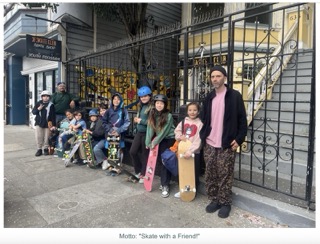
Another part of this project that interests me is how portrait photography can contrast with surveillance technologies like Flock cameras. Both involve cameras documenting people in public or semi-public spaces, but they do so for very different reasons. Flock cameras are designed around monitoring, identification, and security, while I want this project to focus more on consent, context, and how people choose to be represented. That contrast could help me think more critically about the power of a camera. A camera can be used to watch people without their involvement, but it can also be used collaboratively to let people have more control over how they are seen. This makes the project not only about representation, but also about who has control over an image and what purpose that image serves.

Preliminary Research Question

My research question is still developing, but right now I am thinking about:

How can portrait photography of people of color in a small, rural, predominantly white campus resist exoticizing framing, and what choices involving composition, setting, and captions make that resistance visible to viewers?

Methods and Skills

For my method, I want to use digital storytelling through portrait photography. I am also considering incorporating mapping into the project. Using GIS could allow me to connect portraits to specific locations on campus or in the surrounding area, similar to how the Mosaic Atlas connects communities and stories to physical places.

I am still deciding what specific platform I would use for the final project, but I would like to create some form of web-based portfolio. I am also interested in learning more about GIS because it would give me another way to think about the relationship between identity, representation, and place.

Convergence

I have not connected with anyone in class who is working on the same type of project yet. However, I would be interested in talking with anyone who is also working with photography, GIS, mapping, identity, or place-based storytelling. I think there could be useful overlap between these types of projects, especially when thinking about how digital tools shape the way people and communities are represented.

Citations

I used ChatGPT (OpenAI) during the brainstorming process for this project. I used it to help organize my initial ideas, think through possible research questions, and revise the wording of this proposal. The topic, project direction, and final decisions are my own.

Mosaic America. “Mosaic Atlas Story Map Template.” ArcGIS StoryMaps, Esri, storymaps.arcgis.com/templates/7ef3792b2e5d4668b6d58c6a711cabee. Accessed 25 Sept. 2026.
Think about the Little Guy… That means YOU!

Point of Contention: Should college students use generative AI to complete their academic tasks?

Main takeaway: Training people to navigate LLMs and identify generated bodies of work remains important; however, establishing an academic foundation must take priority.

I do not believe that students should use generative AI when completing assignments. When approaching AI, students must consider the consumer-producer relationship. LLMs are trained on human data, and as LLM users, our continued usage only trains them further. While LLM users may find great use in this tool’s ability to produce quick results, even at a systemic level, we must remain cognizant of the true winners: AI developers and companies.

The other half of this relationship- you, us, the consumers, can easily measure the detriments done unto us. Consider this quote from Jon Cheung describing the dangers of how AI exacerbates biases:

“For A.I. image generators trained on biased datasets. They will fill the Internet with biased images, which will then be fed back into datasets for other A.I. image generators, that will then create even more biased images and so on and so forth, thus creating a vicious feedback loop which will both spread and intensify existing biases” (2023).
Scholars are expected to possess critical-thinking skills that transcend bias. Therefore, learning students should not expect A.I. image generators to teach us anything except about A.I. image generators.

The strongest weapon against ignorance has always been curiosity and knowledge. AI actively degrades our cognitive ability- our ability to think critically. The MIT study we discussed in class demonstrates this degradation clearly, describing essays as soulless and lacking originality (2025, p.72). Otherwise known as cognitive debt, which “defers mental effort in the short term but results in long-term costs, such as diminished critical inquiry, increased vulnerability to manipulation, decreased creativity” (2025, p. 151). In other words, AI feeds us biased visual information while concurrently degrading our skills to properly navigate its output.

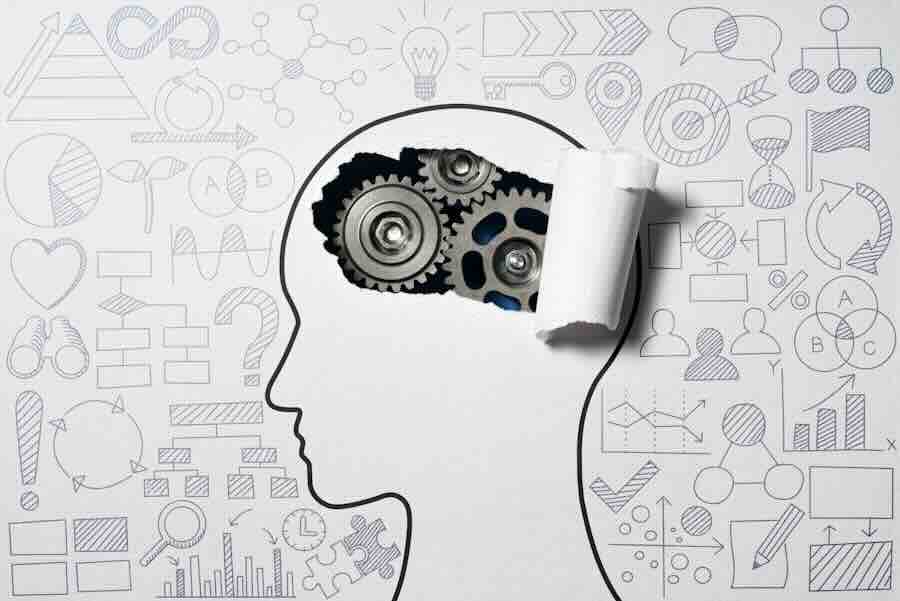
Taken from Getty Images. Keep your gears smooth and running.

These various practices in class have led me to be extremely cautious about how many “menial tasks” I delegate to LLMs. I hope to remain cognizant of how much I truly value my mind, and I hope that everyone reading this feels similarly. To me, these fears are inherently linked to illnesses like dementia or Alzheimer’s. The only exception is that we as consumers, are actively inflicting this illness upon ourselves, individually and as a society.

That being said, I do find it important for consumers to know their product, especially as it infiltrates its way into seemingly every crevice of society and life. As scholars and as informed users, we must understand its strengths to know its weaknesses, and vice versa. And as AI continues to grow, it will almost become inevitable to avoid it- for instance, Copilot and Google’s AI-generated overviews. I urge everyone to be diligent of their regular practices, especially ones that seem free…

Citations:

Cheung, Jon. “How AI Image Generators Make Bias Worse.” LIS, 21 Aug. 2023, https://www.lis.ac.uk/stories/how-ai-image-generators-make-bias-worse.

Kosmyna, N., Hauptmann, E., Yuan, Y. T., Situ, J., Liao, X.-H., Beresnitzky, A. V., Braunstein, I., & Maes, P. (2025). Your Brain on ChatGPT: Accumulation of Cognitive Debt when Using an AI Assistant for Essay Writing Task [Preprint under review][1][2]. MIT Media Lab[1]. https://www.brainonllm.com/

LLMs My Major Takeaway + Thoughts

My main takeaway from this week’s classes, simply put, is that the user’s input dictates the majority of the Large Language Model’s (LLM) output. If LLM users want to produce intended results, they need to be specific in their prompts. This includes detailing the audience, message intention, and other contextual matters. An important practice to create an optimal output is to use follow-up prompts. LLM’s are tools, not sentient beings, and must be instructed.

I really appreciated the quick lesson on why transformers matter and how they sequence words. This video can be found here. I found the theoretical visualization to be fascinating. In reality, though, it’s disheartening to imagine the energy required as data collection continues. This week, Adam brought up some great points regarding AI and environmental concerns. I find that notion to be exceedingly important as scholars continue to test, explore, and/or influence AI’s strengths and weaknesses.

A visual representation of a transformer

Another ethical concern from this week’s classes was about how LLMs can perpetuate human biases at an accelerated rate. As discussed above, LLMs are dictated by their input, and this includes the input of data that they are built trained and trained on (Cheung). Unfortunately, humans hold all types of ignorant biases toward each other. Consequently, as stochastic parrots, LLMs will simply repeat harmful messages unless specifically regulated. Even worse, when prompted to generate images of people, LLM’s tend to depict typical stereotypes. For instance, they will show doctors as white males or dark-skinned Barbies as violent. In today’s age, all consumers must be exceedingly mindful of the products they consume. Especially with regard to products akin to LLM’s that provide quick results.

Cheung, Jon. “How AI Image Generators Make Bias Worse.” LIS, 21 Aug. 2023, lis.ac.uk/stories/how-ai-image-generators-make-bias-worse.

3Blue1Brown. “Transformers, the Tech behind LLMs | Deep Learning Chapter 5.” YouTube, 10 Sept. 2026, www.youtube.com/watch?v=CJ-BY-rQrVM.

Grammarly was used for spelling and grammar purposes.

Data Visualization #1

My visualization is intended to communicate changes in streams for different genres over time. This line graph helps view specific years or the number of streams reached. To simplify the visualization, I removed the “blank” column and reduced the billions to the “B” suffix.

Genres are meant to give listeners a general expectation of how a song will sound. Typically, listeners gravitate towards specific genres to both meet those expectations and to access certain emotional associations. For instance, within this graph, the pop genre is decreasing. This may point to a growing societal disinterest in popular/mainstream culture that the pop genre typically relates to.

As discussed in class, I would hope to further delineate the songs into specific categories. While world/traditional is increasing in streams, the data points mean less if viewers are not able to clearly understand what the genre consists of. The steady increase may be due to a majority of reggaeton streams, which would change the purpose of my title and findings.

My only ethical concern is the inherent focus/bias of the project. I would be interested, as explained above, in more specific genres. This may offer categorizations for the data instances in the “blank” and “other” columns. And I would appreciate data on Spotify’s users themselves, as I imagine most users to be American.

Pierce Duong DH analusos

01
Interesting Questions

1. Are there repeated stories in different issues? How are they presented?

2. I am mainly interested in how contexts change across time. By analyzing these stories across time, scholars might be able to identify the values most important for each year. It may also be interesting to discern if any stories, and subsequent voices are being ignored.

02
Spreadsheet Organization


Rows would represent each data instance. Each row here would represent an issue by The Voice. Characteristics within columns could look like type of story, year, editor characteristics, etc.

03
Data Privacy, my approach

I do not expect any ethical data problems. Participants of The Voice, by nature, expect their work to be received publicly. My only concern might be for older issues, who were not expecting their storeis to be digitized and widely acceptable.

Title

Short Description

The Wooster Voice https://www.instagram.com/thewoostervoiceofficial/ © Copyright 2026 The Wooster Voice.

Pierce_introductions&muddypoints