Beyond the Boarders: Mapping Human Impact Around America’s National Parks
National parks may protect land within their boundaries, but environmental change doesn’t stop at the park entrance.
Slide 1- Introduction
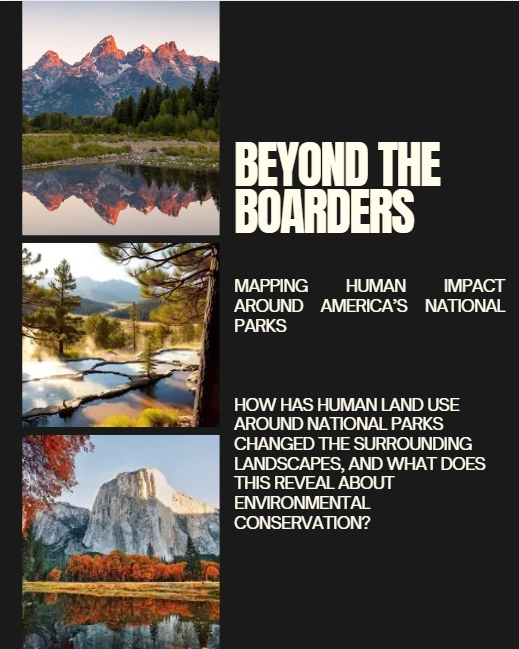
Alt text:
A three-image collage featuring scenic landscapes from U.S. national parks. Beside the images, the title “Beyond the Borders” introduces a project exploring how human land use around national parks affects surrounding landscapes and environmental conservation.
Slide 2- What is Digital Humanities?
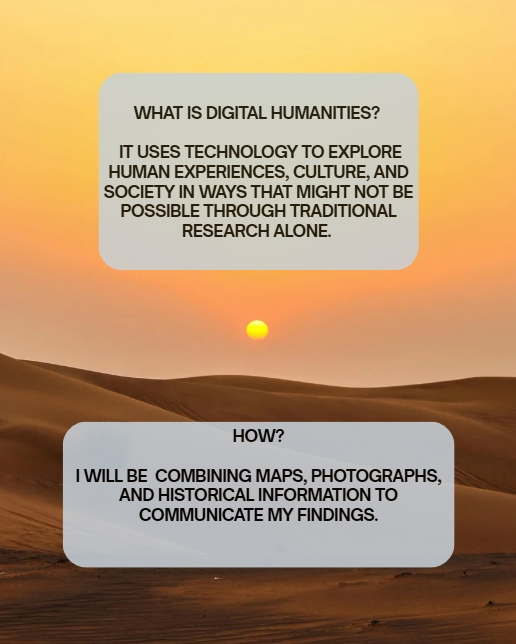
Alt Text:
A slide defining Digital Humanities as the use of technology to explore human experiences, culture, and society. The slide explains that the project will combine digital maps, photographs, and historical information to communicate environmental research findings.
Slide 3- Connection with Class Reading
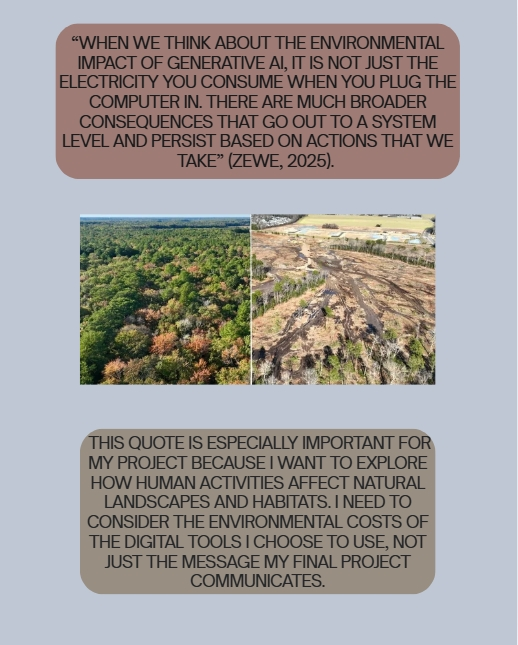
Alt Text:
A quote about the environmental impact of technology, accompanied by photos comparing a healthy forest to cleared land. The slide connects the reading to how human activities affect natural environments and habitats.
National parks are designed to protect natural landscapes, but what happens when human development continues just beyond their borders?
Why does this matter? This project matters because national parks are meant to protect natural environments, but human activities outside their boundaries can still affect the land and wildlife within them. Things like roads, agriculture, and urban development can disrupt habitats and change surrounding landscapes. I want to explore how these activities impact national parks and why protecting the environment should extend beyond park boundaries.
How will it be done? To complete this project, I will research several national parks across the United States and collect information about the land surrounding them. I will use GIS mapping to create maps that show park boundaries, nearby development, roads, and other land-use patterns. I also want to compare historical and current maps to see how these landscapes have changed over time. Finally, I will combine my maps, photographs, and research into a digital story that helps explain the relationship between human activity and environmental conservation.
Process: When I was creating the Instagram Slides, I wanted to incorporate the main reason of the project and that is the landscapes that are being impacted. I chose photographs of national parks and different landscapes because I wanted the audience to see what is being protected and what could potentially be affected by surrounding development. I also wanted the slides to have a nature-inspired aesthetic that connected to my topic through the use of landscape photography and earthy colors. I kept the text relatively short so the main ideas would stand out and the audience would stay interested.
AI Detection: I used Grammarly to auto correct my spelling.