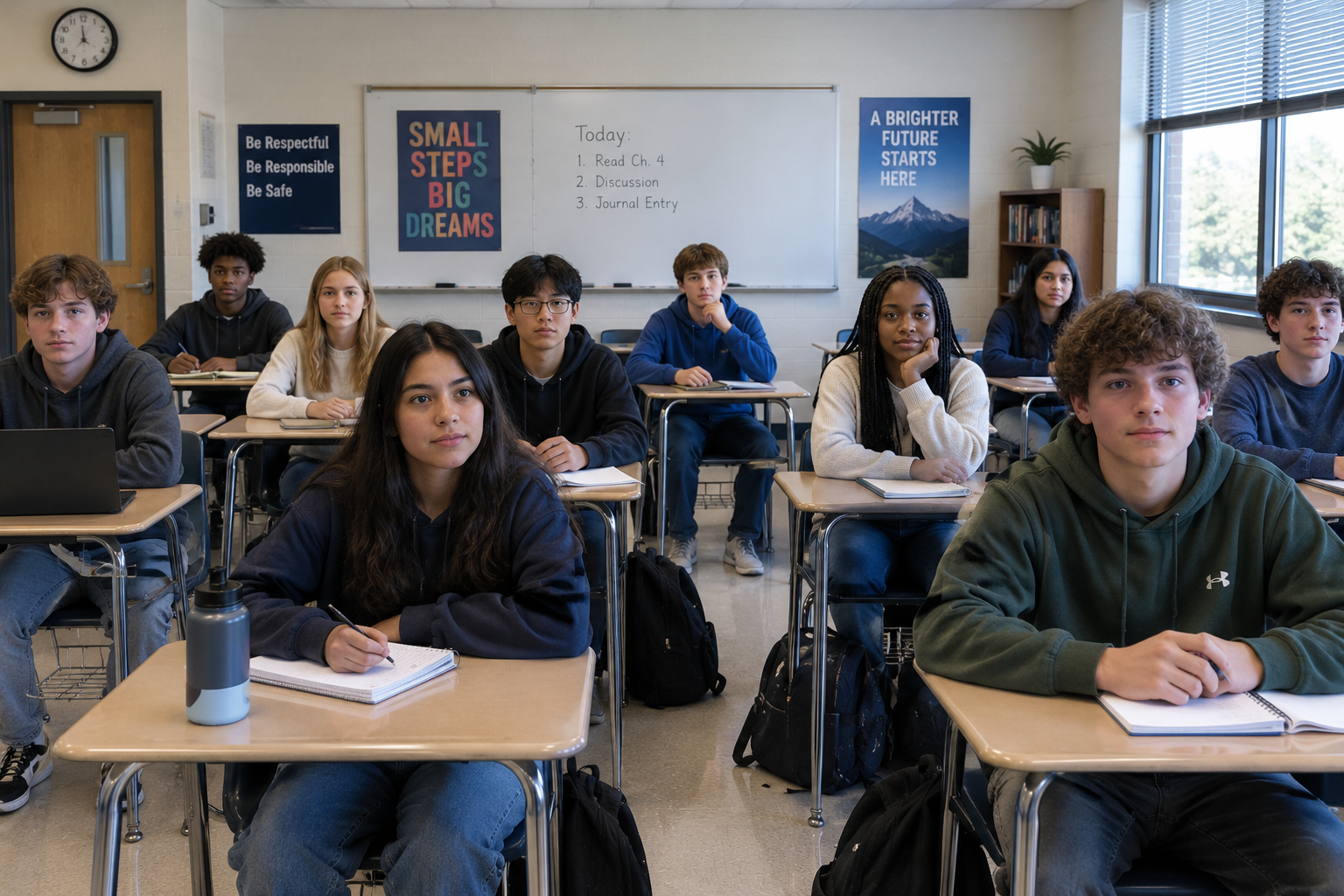
The Dilemma: With the rise of publicly available Large Language Models the question of it’s use in academics has been one educators and students have pondering The past two weeks of class have made it quite clear that the use of LLMs in academia to “help” with cognitive tasks is a slippery slope. All of that said, I believe that students should not use ANY generative AI models to complete academic task.
The Reasoning/Process: There are two sources we looked at in class which, to me, represent the biggest issues for students or really anyone relying on LLMs to help with cognitive task or with generating images and data. Firstly, the MIT report, which looked at the cognitive effects of using LLMs when writing an essay compared to those who simply used their brain to write it. While in truth their study wasn’t perfect, it doesn’t address AI use in the medical or scientific field, the results for the academic field are hard to argue against. Within this study MIT took 54 participants and split them up into three groups. The LLM group, Search Engine group and Brain-only group. By the end of the study it was shown that more external help the participants had in writing the essay the less their brain connectivity was. “Brain connectivity systematically scaled down with the amount of external support: the Brain‑only group exhibited the strongest, widest‑ranging networks, Search Engine group showed intermediate engagement, and LLM assistance elicited the weakest overall coupling.” The Brain-only and Brain-to-LLM participants showed a greater sense or ownership, memory recall, and overall better scoring.
When we did our own little study in class, while factors like the size of class or the time we had to produce our arguments definitely impacted the results, they still overall showed the exact same thing. Those who wrote their arguments using their own brain had a better time recollecting what they had written in comparison to those who relied on a LLM to write out their entire argument for them.
Another aspect of this is the use of AI image generation and the bias it can present. AI image generation can be used on things like presentations for example, However AI’s bias producing issues are a major hit against it when using it in such a way. Since, generative AI models produce sentences and images by predicting the statistical likelihood of what comes next or what should be generated based on token patterns they may generalize already biased data, then present and even more biased version of it. What’s worse is then the models train itself on that output thus making the bias even worse.
Artifacts – This can be demonstrated in the generated Image below. One of the main things I tested was diversity when it came to image generation. Thus I asked ChatGPT to create an image of the Average American classroom. To not possibly skew the results I left the subject out of the prompt. Here you can see a classroom of students. To untrained eye this looks like a pretty good representation of what the American classroom looks like nowadays, right? Well, not exactly. Firstly, while there is diversity here, it’s basic. The biggest issue is not only the vagueness of ethnic background ( is anyone here from Europe, South America, Mexico, Africa?) but also gender is pretty much as basic as it gets. There is no clear signs of anyone who may not identify as male or female or who may have perhaps transitioned. Now, granted asking the generative AI to put that there may make the system draw way too much attention to it rather than just inserting it casually and naturally. Lastly everyone is wearing the same hoodie and the same pear of jeans.
A portion of the main home page of the MIT report summarizes my thoughts of LLM use in academia. “As the educational impact of LLM use only begins to settle with the general population, in this preliminary study we demonstrate the pressing matter to explore further any potential changes in learning skills based on the results of our study. The use of LLM had a measurable impact on our participants, and while the benefits were initially apparent, as we demonstrated over the course of 4 sessions, which took place over 4 months, the LLM group’s participants performed worse than their counterparts in the Brain-only group at all levels: neural, linguistic, scoring.”
Cheung, J. (2023, August 21). How AI image generators make bias worse. London Interdisciplinary School. https://www.lis.ac.uk/stories/how-ai-image-generators-make-bias-worse
Kosmyna, Nataliya. “Your Brain on Chatgpt: Accumulation of Cognitive Debt When Using an AI Assistant for Essay Writing Task.” Your Brain on ChatGPT: Accumulation of Cognitive Debt when Using an AI Assistant for Essay Writing Task, June 2025. https://www.brainonllm.com/.