AI USED: Grammarly for Spellcheck and ChatGPT for Imaging.
I am studying the effects of AI on creativity. With the rise of AI, artists are being affected alongside many other job fields. They have AI taking their art, replacing their work with environmentally damaging generations, and affecting an ancient form of expression. So I am asking: How is AI changing the art world for better or worse?
I am an artist, and I want to showcase the real-world effects that AI is having on the art field. Artists are fighting against it while others are starting to incorporate it into their work. I want to see if the pros and cons outweigh each other and dive into the ethics and prompting involved in AI art. I want to go into the ethics of environmental concerns by linking our reading about how much power is used in LLMs vs. the environmental effects of standard artists, such as chemicals in paint and waste from unused tools.
I am going to use my own creativity and put it to the test against two different LLMs, such as ChatGPT and Gemini. I will assess the process and how it differs between art creation, realism/accuracy, references, and ethical creation. I will do this by also dive into how much electricity and environmental impact AI art has compared to my own art.
“The computational power required to train generative AI models –– leads to increased carbon dioxide emissions and pressures on the electric grid.” (MIT News)
– This is an important quote from the reading to me because the environment is something I care about. Generative text prompts use much less than imaging prompts do. If people are using AI to create art/images, they are using thousands of times more energy.
Digital humanities, to me, is research that combines traditional studying with technological tools. I am studying a topic such as art that is more “paper and pencil” and working with more modern, advanced technology to study the differences between them.
Process- To make these slides, first I wrote up some basics such as what my project is, how I will do it, and why. I then took this to form my imaging slides on Canva. Once creating on Canva, I made a basic outline of my ideas in a way that I could see it being on an about page.
Reflection- I honestly struggled with this because my brain doesn’t process this way. It is very difficult for me to take projects in a step-by-step manner that is broken down like this. I work in a different order, so in a way this has been making me more stressed. I don’t do well with working on it in class because there are too many distractions, and I would prefer to do it on my own. I am still confused about what is wanted for the final, so I hesitate to start. I like that we are given in-class time because I am busy; however, most of my work I cannot do in class. By doing the Instagram slides, I didn’t find it very helpful personally because it is a repeat of the work I have already done.
Image Created by Gracyn Zerby. Goache Painting 2024
Image generated by ChatGPT, prompt: “Create an image of a painting of a McLaren F1 car,” OpenAI, accessed Nov. 4, 2026
Zewe, A. (2025, January 17). Explained: Generative AI’s environmental impact. MIT News. https://news.mit.edu/2025/explained-generative-ai-environmental-impact-0117?utm_source=chatgpt.com
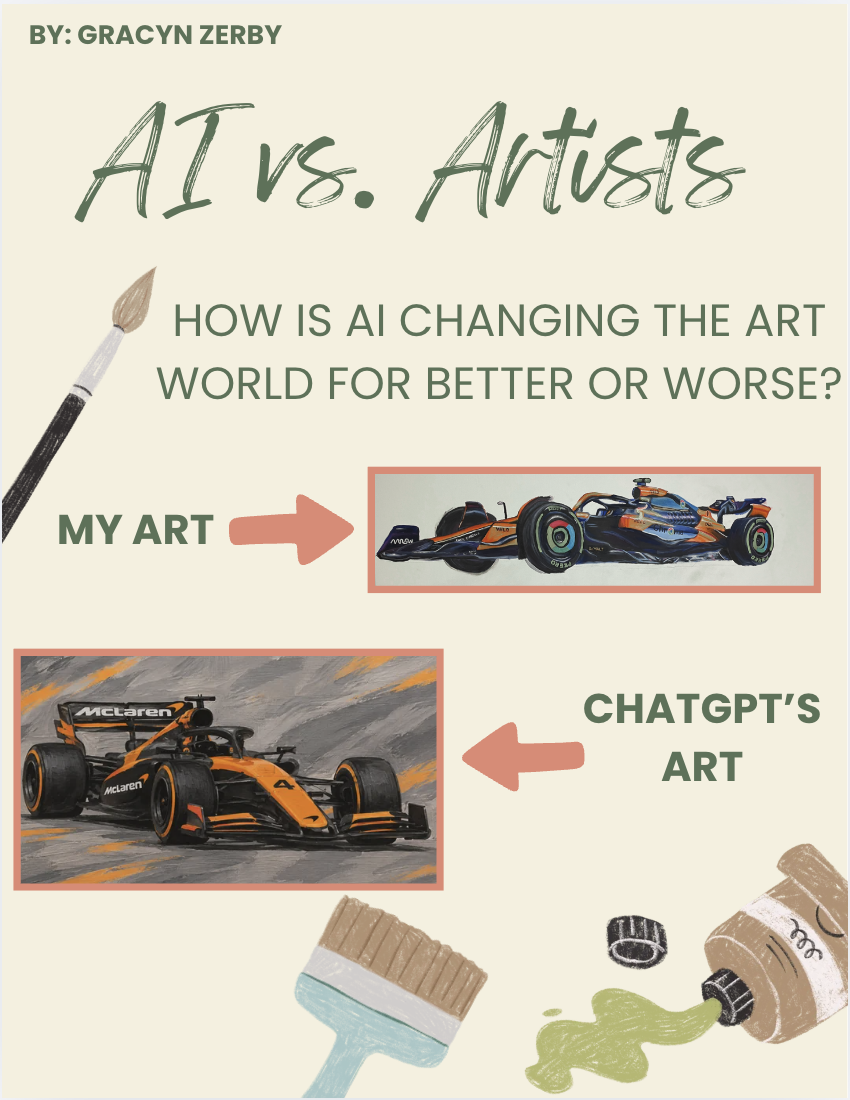
ALT Text: Title slide introducing the project AI vs. Artists by Gracyn Zerby showing an image comparison of the creator’s art to a ChatGPT-generated image of the same prompt.
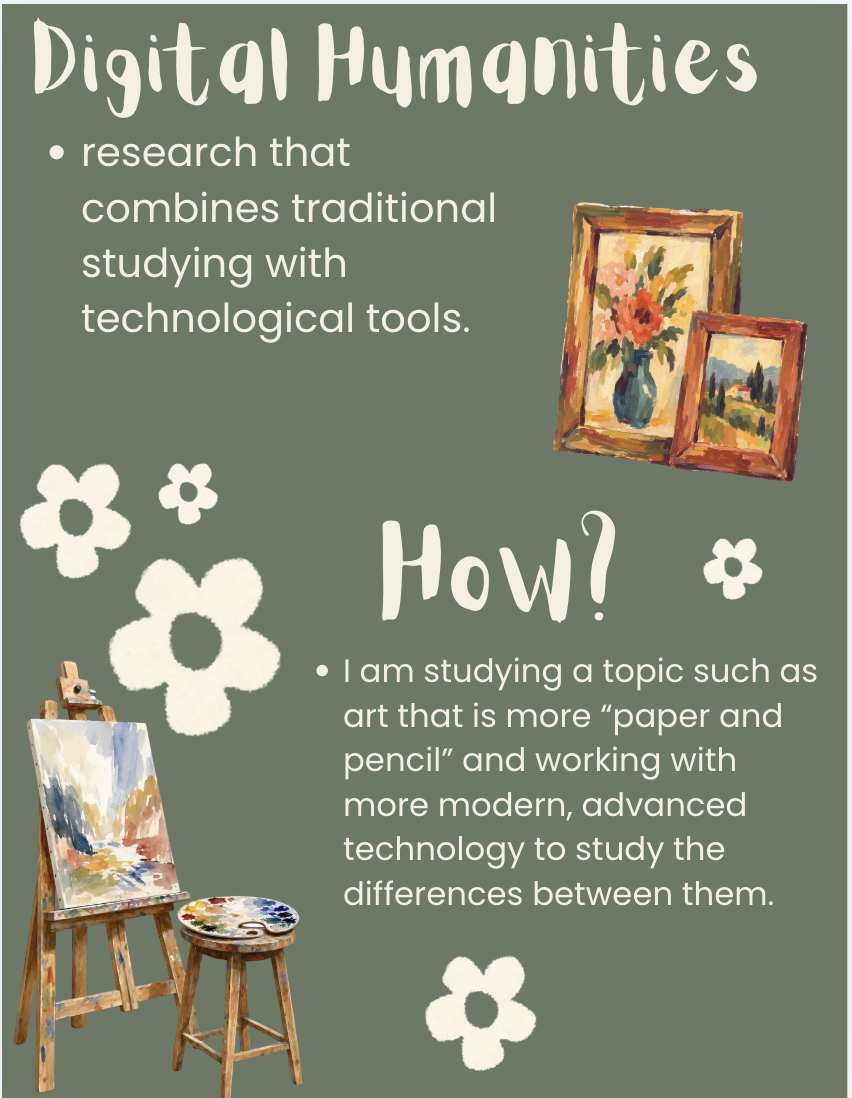
ALT Text: A description of Digital Humanities and how my definition is being used in my project.
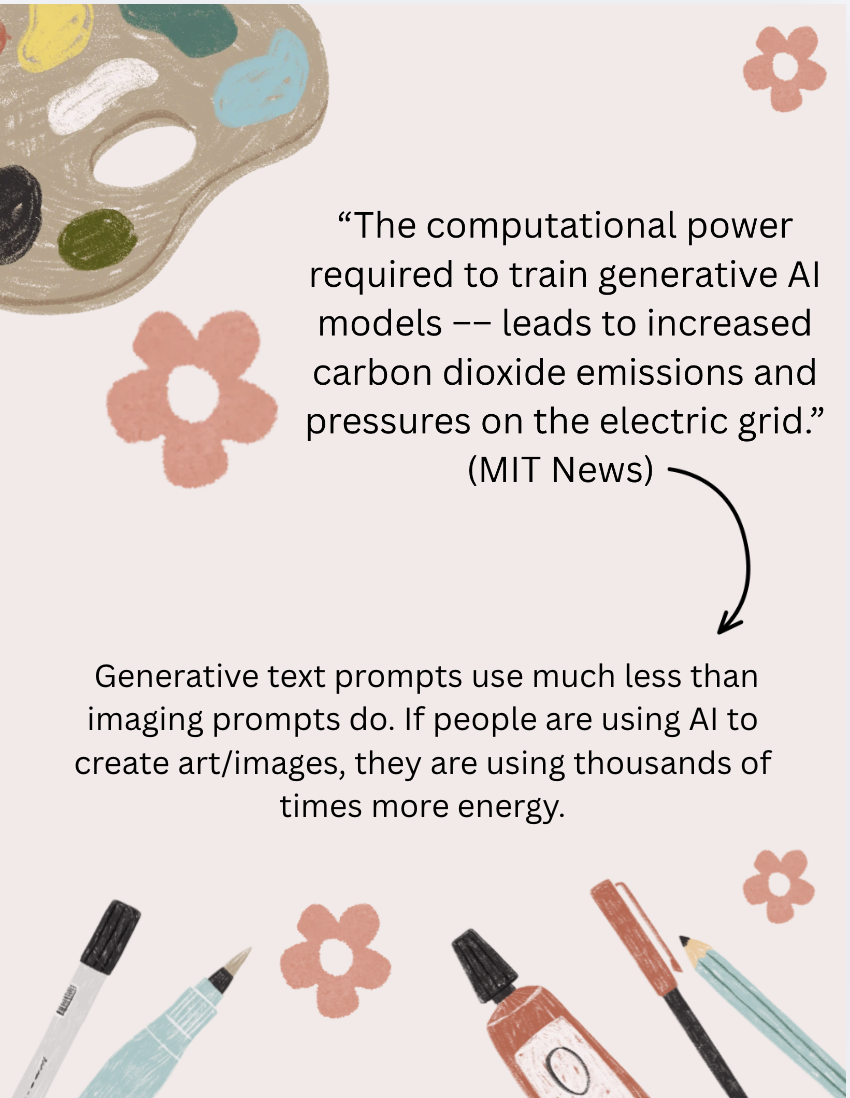
ALT Text: A quote from The MIT News reading about ethical concerns with the environment. Then an explanation of the impacts of AI used for art creation.