This project idea started from my photography class. I have always liked photography projects that focus on people and their experiences because I think photos can capture parts of someone’s identity and presence that are difficult to explain through words alone. As I started thinking more about representation, though, I became interested in a more complicated question: what happens when the camera can also contribute to the same problem it is trying to address?
For this project, I want to photograph people of color living or studying in a small, rural, predominantly white area, most likely beginning with campus and the surrounding community. One project that influenced this idea was the Mosaic Atlas. I was interested in the way that project connects identity, community, and location. It made me think about how I could explore similar ideas through portrait photography and possibly connect individual portraits to the places where people live, work, or spend time.
So What?
Part of my interest in this project is simple: I enjoy photography and want to continue developing my skills with it. At the same time, I think representation matters differently in places where people of color may already be underrepresented. Who gets photographed, how they are photographed, and what context is given to those images can influence how people understand a community.
I am especially interested in the difference between representing someone and making them seem like an outsider or an exception. In a predominantly white rural environment, photographing people of color could unintentionally emphasize their difference rather than simply recognizing their presence in the community. I do not think a photography portfolio can completely solve this problem, but I want the project to pay attention to the choices being made behind the camera instead of treating those choices as neutral.
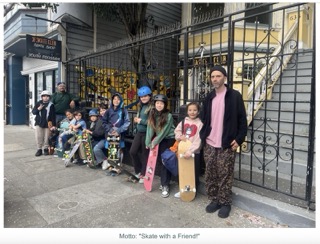
Another part of this project that interests me is how portrait photography can contrast with surveillance technologies like Flock cameras. Both involve cameras documenting people in public or semi-public spaces, but they do so for very different reasons. Flock cameras are designed around monitoring, identification, and security, while I want this project to focus more on consent, context, and how people choose to be represented. That contrast could help me think more critically about the power of a camera. A camera can be used to watch people without their involvement, but it can also be used collaboratively to let people have more control over how they are seen. This makes the project not only about representation, but also about who has control over an image and what purpose that image serves.
Preliminary Research Question
My research question is still developing, but right now I am thinking about:
How can portrait photography of people of color in a small, rural, predominantly white campus resist exoticizing framing, and what choices involving composition, setting, and captions make that resistance visible to viewers?
Methods and Skills
For my method, I want to use digital storytelling through portrait photography. I am also considering incorporating mapping into the project. Using GIS could allow me to connect portraits to specific locations on campus or in the surrounding area, similar to how the Mosaic Atlas connects communities and stories to physical places.
I am still deciding what specific platform I would use for the final project, but I would like to create some form of web-based portfolio. I am also interested in learning more about GIS because it would give me another way to think about the relationship between identity, representation, and place.
Convergence
I have not connected with anyone in class who is working on the same type of project yet. However, I would be interested in talking with anyone who is also working with photography, GIS, mapping, identity, or place-based storytelling. I think there could be useful overlap between these types of projects, especially when thinking about how digital tools shape the way people and communities are represented.
Citations
I used ChatGPT (OpenAI) during the brainstorming process for this project. I used it to help organize my initial ideas, think through possible research questions, and revise the wording of this proposal. The topic, project direction, and final decisions are my own.
Mosaic America. “Mosaic Atlas Story Map Template.” ArcGIS StoryMaps, Esri, storymaps.arcgis.com/templates/7ef3792b2e5d4668b6d58c6a711cabee. Accessed 25 Sept. 2026.
I think this will turn out really cool because theres so much you can get from photography and representation.