
AI USED: Grammarly for spell check.
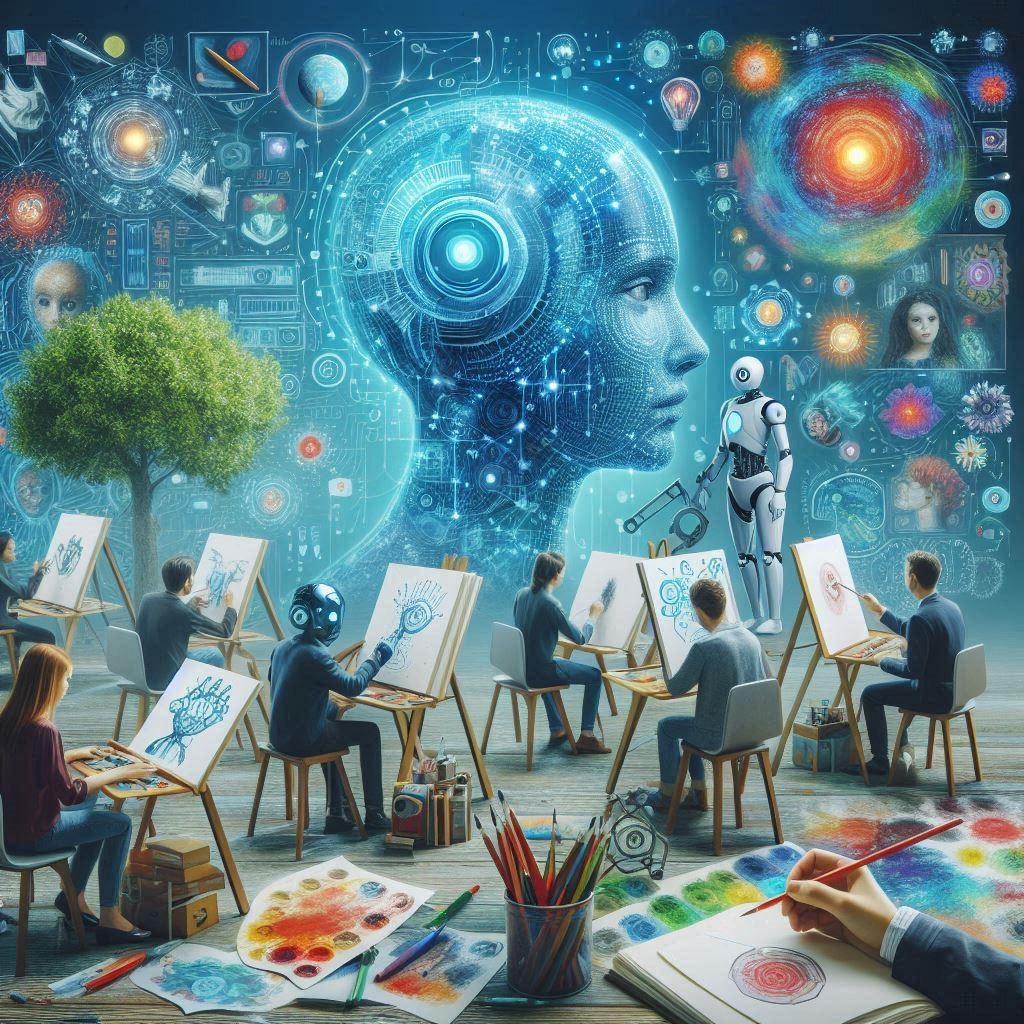
Shaner, Kyle. “UC Student Explores AI Art Ethics”. UC News, July 31, 2024, https://www.uc.edu/news/articles/2024/07/uc-student-explores-ai-art-ethics.html
Some ethical and inclusive concerns I have are for those who cannot connect with visual art, such as those with visual disabilities. I am also concerned about language barriers, misunderstanding from non-artists, and those who struggle with brainstorming.
How I plan to address these concerns is by relating how this method could be used for non-visual art such as music, or creating captioning for my images I provide that can then be played out loud. I also want to make it so that there could be a translator applied by using simple language that can be directly translated. For non-artists, I want to explain my process in depth and all that goes into art to show how AI really can affect it. That in turn can also explain my art process and ideas compared to how other artists may do things.
To also connect this to data collection and privacy with ethics, I want to be transparent in my AI usage by stating my prompts, my results, what models I use, why I am using them, and anything else I come across that could be related. It is a concern of mine whether or not the AI will be taking my art and ideas that are entered and using them to train and take them for its own benefit. But this is a concern I can raise to other artists who may not be aware. In the Cornell study I am using as a source, they also mention this is saying, “Accusations of art theft arose surrounding the use of creatives’ works to train these models, as image outputs emulated prominent artists’ styles without their consent” (Campitiello). This highlights my point of concern about my personal art being integrated into the model. All art styles are different, but if the model uses them all to train, then that unique aspect can disappear.
It will also be interesting to see if the different AIs I will use will create different pieces based on bias. Another point is figuring out if AI prompting for art takes more electricity and damages the environment more than an average prompt. To continue this thought, is using AI for planning or referencing plagiarism? Technically, you are not using your own ideas for a starting point, similar to how you may reference a reading in text. These are all things I need to think about further during this process.
To go with this concern, all that Google’s prompt guide shows for art is the description of its ability. This description is, “Design prompts that specify art styles, techniques, and subject matter to guide the AI in creating images that mimic specific artistic movements or evoke certain emotions.” (Google). The environmental concern for me is that, yes, you can submit a specific prompt as it says, but you will most likely need to refine the prompts and continue prompting. Therefore, it is not a single entry of an image prompt, but something you have to continue to submit multiple times for small fixes that it may not understand or ever fix. It specifically says, “to guide the AI” (Google), showing that you have to continue to give direction to it. We went over this prompt guide in class; however, we didn’t focus on this part of the reading, the part related to images. So in my study, I want to further explore this topic.
To represent the art community, I am referencing sources from other artists doing a similar study to show their ideas on the topic and their differing uses/styles. As I am just one artist out of millions, my ideas are not universal. And for others to test this, I can give prompts and something to try on their own to facilitate community participation.
In reflection of my planning, more concerns have come to me, such as these environmental impacts, how inclusive my work needs to be, and if the AI will take my art style. I will continue to reflect and try to find answers for these as I work.
Campitiello, Jess. “AI vs. Artist: The Future of Creativity.” Cornell Tech, February 20, 2023, https://tech.cornell.edu/news/ai-vs-artist-the-future-of-creativity/
“Prompt Engineering: Overview and Guide.” Google Cloud, May 4, 2026, https://cloud.google.com/discover/what-is-prompt-engineering